Select a Solution
Value Systems
Company
Resources
Leadership • Team Performance
Successfully Managing Intergenerational Teams
Generational differences rarely become performance problems on their own. They become problems when operating norms, communication expectations, decision rights, and feedback loops are too vague to hold a mixed team together cleanly.
Teams are often described through generational stereotypes: who values structure, who wants flexibility, who prefers direct feedback, who expects autonomy.
Some of those patterns are real enough to notice. But most performance breakdowns blamed on “generational differences” are really system problems.
When expectations are unclear, every difference gets amplified. When expectations are explicit, mixed teams usually perform better than leaders expect.
What actually matters most
Intergenerational teams work best when the operating basics are strong: clear roles, clean handoffs, explicit standards, visible priorities, and a feedback rhythm people can trust.
People can adapt to different styles more easily than they can adapt to unclear expectations.
The core dynamic
Differences are manageable. Ambiguity is expensive.
Team members may differ in communication style, speed preferences, comfort with tools, or expectations around autonomy. Those differences become friction when the work system leaves too much open to interpretation.
- who owns the task
- what “done” means
- when feedback happens
- what should be escalated
Without those anchors, generational differences become the language used to describe what is really a management-design issue.
Where managers get stuck
Assuming one style fits everyone
Managers default to their own communication pattern and assume misalignment is a personal issue rather than a design issue.
Leaving feedback timing implicit
Some employees want more frequent calibration, others prefer space. Without a clear rhythm, both sides can misread the situation.
Confusing flexibility with vagueness
Leaders try to be adaptive, but in the process remove too much structure for the team to coordinate smoothly.
Attributing process issues to personality
What looks like a generational problem often turns out to be weak role clarity, inconsistent standards, or no agreed way to escalate issues.
The operating model that helps mixed teams perform
Clarify role ownership
Make responsibility explicit so less time is spent inferring expectations from style.
Standardize what “good” looks like
Define the quality bar, deadlines, and outputs clearly enough that preference differences matter less.
Set a visible feedback rhythm
When feedback timing is predictable, fewer people misread silence or urgency.
Normalize escalation
Mixed teams coordinate better when they know when to ask for help and how issues should move upward.
A familiar example
The team with different styles but one shared workflow
What usually happens
Leaders focus on who prefers meetings, who prefers async communication, and who wants more autonomy. The team keeps discussing style while the work still slips.
What works better
The manager clarifies role ownership, output standards, handoff rules, and feedback cadence. Style differences remain, but the system holds the team together.
Manager Checklist
Before blaming “generational differences,” ask these five questions
- Does everyone know what they own?
- Is the quality bar explicit?
- Is feedback happening on a visible rhythm?
- Do handoffs work without reminders?
- Does the team know when and how to escalate?
The takeaway
Intergenerational teams rarely need perfect cultural harmony to perform well.
They need cleaner operating rules than many managers realize. Stronger structure makes style differences easier to absorb.
Related resources
Article
Untangle the Chaos: Mastering Process Roles
Why clear process roles reduce friction, duplicate effort, and hidden escalation.
Read article →Article
CEOs Waste 20–40% of Their Time on Alignment
Why alignment expands when decisions do not close hard enough to travel.
Read article →Tool
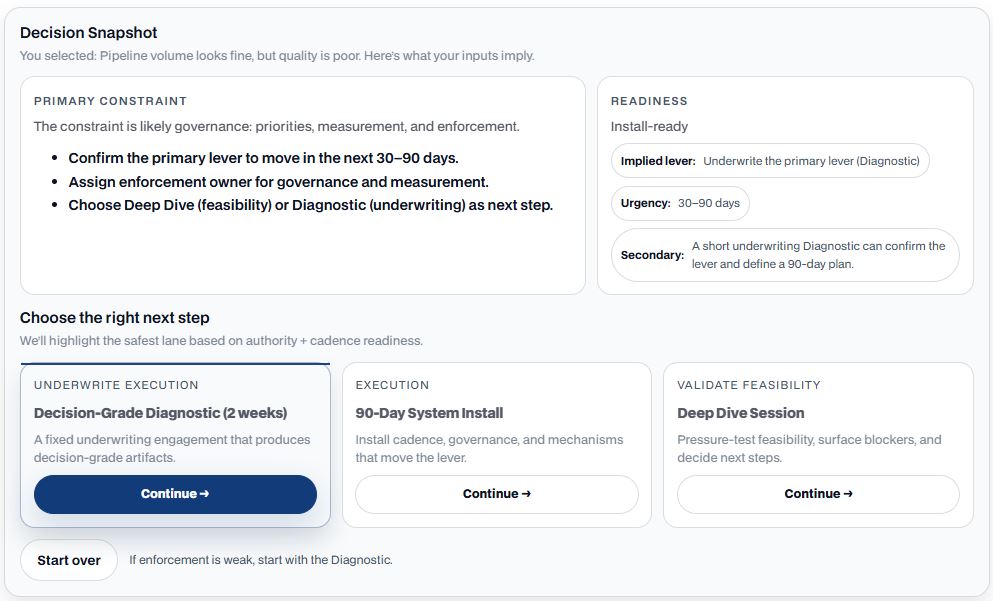
Decision Snapshot
Get a fast read on where ambiguity, ownership gaps, and coordination drag are accumulating.
Open tool →Source note
Originally published by Joshua Durkin on Medium. This version has been adapted for Goldmont’s on-site resource library and may include updated structure, examples, CTAs, and related operating resources.
Next step
Need to know where team friction is really coming from?
Start with a Decision Snapshot to identify whether the issue is role clarity, feedback rhythm, escalation logic, or another design problem hiding behind interpersonal language.
For sensitive information: we’re happy to sign an NDA. Please avoid sending confidential details via forms until an NDA is in place.